WCAG & ADA Compliance 2026: How AI Video Description APIs Automate Accessibility at Scale
96.3% of websites still fail WCAG. Learn how modern AI Video Description APIs are helping platforms meet ADA, Section 508, and WCAG 2.2 requirements automatically — without hiring teams of human describers.
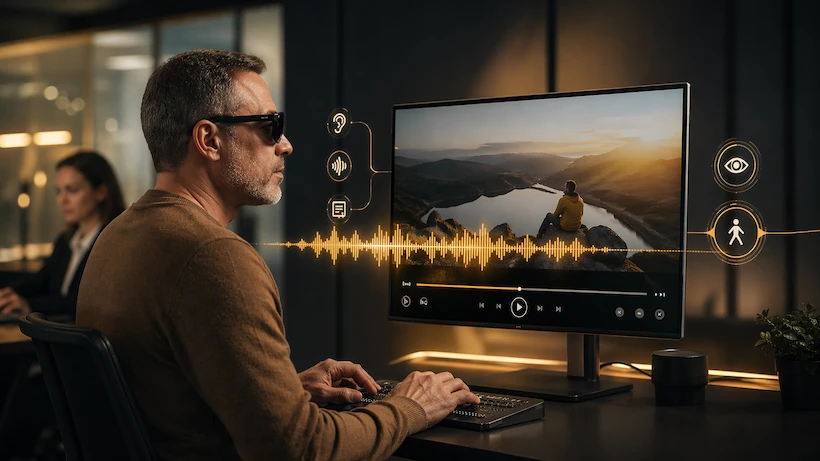
WCAG & ADA Compliance 2026: How AI Video Description APIs Automate Accessibility at Scale
In April 2026, new ADA Title II regulations officially took effect. Combined with WCAG 2.2 and growing enforcement actions, accessibility is no longer optional — it’s a legal and business risk.
Yet according to the latest WebAIM Million report, 96.3% of homepages still fail WCAG 2.1 AA, with an average of 50.8 errors per page. Video content is one of the biggest contributors to these failures.
For platforms that host thousands — or millions — of videos, manually creating audio descriptions and text alternatives is simply not scalable. This is where AI Video Description APIs are changing the game in 2026.
The Accessibility Problem Video Platforms Face
Most video platforms today have three painful options:
- Ignore accessibility — and risk lawsuits, lost government contracts, and damage to brand reputation.
- Hire human describers — extremely expensive and impossible to scale for user-generated content.
- Use basic auto-captioning tools — these only solve part of the problem, namely spoken content, and completely miss visual context.
None of these options are sustainable in 2026.
How Modern AI Video Description APIs Solve Accessibility
The latest generation of Video Description APIs, such as Descrideo, goes far beyond simple captioning. It combines:
- Visual scene understanding — identifies actions, objects, text on screen, emotions, and setting
- Audio transcription + context — captures dialogue, tone, and important sound effects
- Combined vision + audio analysis — produces rich, narrative descriptions that actually help blind and low-vision users understand what is happening
This output can be used directly as:
- Audio description tracks
- Long-form text descriptions for screen readers
- Alt text for video thumbnails
- Structured data for accessibility audits
Real Compliance Benefits in 2026
Platforms using dedicated AI Video Description APIs are seeing measurable improvements in:
- WCAG 1.2.3 and 1.2.5 compliance for audio description
- Section 508 and ADA Title II readiness
- Reduced legal risk
- Better user experience for disabled users, which also improves overall retention metrics
Many organizations are now using these APIs not just for compliance, but because accessible video content performs better in search and recommendation systems.
How to Implement Automated Video Accessibility
The most effective approach in 2026 usually follows this flow:
- User uploads video
- Platform sends the video URL to a Video Description API
- The API returns structured accessibility metadata, including description, audio description script, and timestamps
- The platform automatically attaches the content to the video player
- The video becomes more compliant and more discoverable
With proper webhook implementation, this entire process can happen in near real time.
Getting Started with AI-Powered Video Accessibility
If your platform hosts video content and you’re concerned about accessibility compliance in 2026, the fastest way to assess the impact is to:
- Run a sample of 100 existing videos through a modern Video Description API
- Compare the quality and completeness of AI-generated descriptions versus your current manual or basic auto-generated versions
- Measure the difference in WCAG audit scores
Most teams are surprised by how much better modern AI performs compared to older tools.
Want to test how well AI can describe your videos for accessibility?
Try Descrideo’s free sandbox → Get real accessibility-ready descriptions in minutes.
Explore how other platforms are using it: See accessibility use cases →
Descrideo combines visual and audio AI to generate accurate, WCAG-compliant video descriptions at scale — helping platforms meet 2026 accessibility requirements without manual effort.