Video SEO in 2026: Why AI-Generated Metadata Is Now Non-Negotiable for Video Platforms
Manual titles and descriptions no longer cut it. Discover how AI Video Description APIs are transforming video discoverability, CTR, and accessibility — and why leading platforms are switching in 2026.
Video SEO in 2026: Why AI-Generated Metadata Is Now Non-Negotiable for Video Platforms
In 2026, video is no longer just “nice to have” — it’s the primary content format driving organic growth. Short-form and long-form video together deliver the highest ROI for marketers, and search results containing video generate 157% more organic traffic than text-only pages.
Yet most platforms are still losing massive visibility because of one outdated practice: manual video metadata.
If your team is still writing titles, descriptions, and tags by hand — or using generic AI tools that only look at the first few seconds of video — you’re falling behind. Google and YouTube’s algorithms have become significantly smarter, and they now penalize weak metadata more harshly than ever.
The 2026 Video SEO Reality Check
YouTube and Google now use advanced semantic understanding to analyze not just what you claim in the metadata, but what the video actually contains. Poor or generic titles and descriptions lead to:
- Lower impressions (YouTube itself reports optimized metadata can increase impressions by ~30%)
- Reduced click-through rates
- Weaker algorithmic recommendations
- Missed opportunities in AI Overviews and rich results
In short: if your metadata doesn’t accurately reflect the full content of the video, the algorithm treats it as low-quality.
This is exactly why forward-thinking video platforms, marketplaces, and content networks are moving to dedicated AI Video Description APIs.
Why Manual (and Basic AI) Metadata Falls Short
Traditional approaches have three fatal flaws in 2026:
- They’re too slow — Human writers can’t keep up with thousands of daily uploads.
- They’re incomplete — Most tools only analyze visual frames or only audio. They miss context that exists when both are combined.
- They lack consistency — Different writers produce wildly different quality and keyword usage, hurting brand consistency and SEO performance.
The result? Platforms that rely on manual or basic AI metadata see declining discoverability even as their video volume grows.
How Modern AI Video Description APIs Actually Work
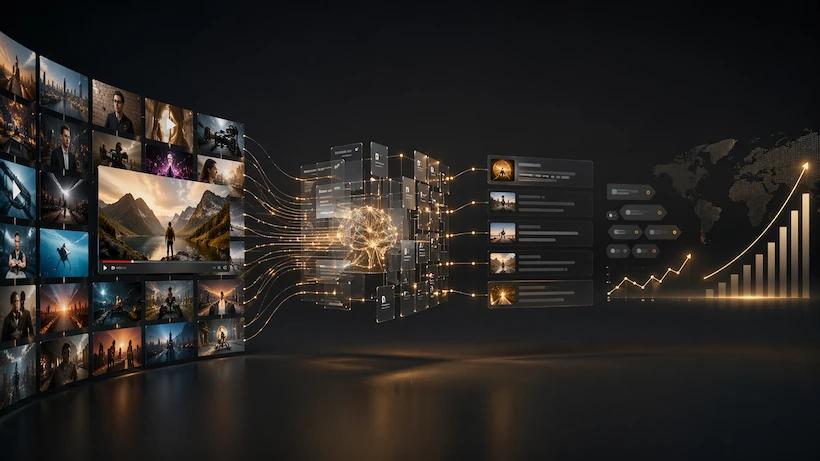
The new generation of Video Description APIs, including Descrideo, doesn’t just “summarize” video. It combines:
- Visual frame analysis — Understands scenes, objects, actions, text on screen, and visual style
- Audio transcription + semantic analysis — Captures spoken content, tone, and context
- Combined vision + audio mode — Generates descriptions that reflect what’s actually happening in the video
This dual analysis produces significantly more accurate and SEO-rich output:
- Keyword-optimized titles
- Detailed, searchable descriptions
- Relevant tags
- Even ready-to-use VideoObject schema for rich results
The best part? It happens automatically via API + webhooks the moment a video is uploaded.
Real Impact Across Different Use Cases
Video Platforms & UGC Sites
Automatically generate high-quality metadata for every user upload. Result: better search rankings inside the platform and improved external discoverability on Google and YouTube.
E-commerce
Turn product demo videos, unboxing videos, and tutorials into SEO-optimized descriptions that rank for commercial keywords — at scale.
Accessibility & Compliance
Generate WCAG-compliant audio descriptions and text alternatives automatically. Many organizations are now using AI Video Description APIs to meet ADA and Section 508 requirements without hiring teams of describers.
Podcasts & Audio-First Content
Even without visuals, modern APIs can generate high-quality show notes, episode descriptions, and topic tags from audio alone.
Why a Dedicated Video Description API Beats Generic AI Tools
Most teams try to solve this with ChatGPT, Claude, or Gemini. While these tools are powerful, they have critical limitations for production use:
- No native webhook support for real-time processing
- Inconsistent output quality across thousands of videos
- No built-in VideoObject schema generation
- Security and data retention concerns, especially with user-generated content
- Rate limits and unpredictable costs at scale
A purpose-built Video Description API solves all of these problems with:
- Consistent, production-grade output
- HMAC-signed webhooks
- Sandbox environment for testing
- Predictable token-based pricing
- Enterprise-grade security and compliance
How Leading Platforms Are Implementing It in 2026
The most successful implementations follow this pattern:
- User uploads video → Platform sends URL to Video Description API
- API processes in background (vision + audio)
- Webhook delivers structured metadata (title, description, tags, schema)
- Platform automatically attaches metadata to the video record
- Video becomes immediately discoverable with rich metadata
This entire flow happens in seconds to minutes — with zero manual work.
Getting Started with AI Video Description: Practical Next Steps
If you’re responsible for video SEO or platform growth in 2026, here’s what you should do this quarter:
- Audit your current metadata quality (sample 50 recent videos and check how well titles/descriptions match actual content)
- Test a dedicated Video Description API on a batch of existing videos
- Measure the difference in keyword coverage and estimated search visibility
- Run a small pilot with new uploads and track CTR and impressions
Most platforms that run this test see a clear improvement in discoverability within 2–4 weeks.
Ready to see what AI-powered video metadata can do for your platform?
Try Descrideo’s free sandbox → No credit card required. Get real API responses in minutes.
Or explore how other teams are using it: See real use cases →
Descrideo is the developer-first Video Description API that combines visual and audio analysis to generate accurate, SEO-optimized titles, descriptions, and tags at scale.